
The 1960s Anti‑War Movement was one of the most defining cultural forces of the decade. Rooted in the broader counterculture, it reshaped politics, music, fashion, and youth identity across multiple countries. At its core, it was a rejection of authority, militarism, and traditional social norms — a global call for peace that changed how people dressed, created, and expressed themselves.
Where the Anti‑War Movement Emerged
The anti‑war movement was not confined to the United States. It appeared across the Western world as part of the broader counterculture.
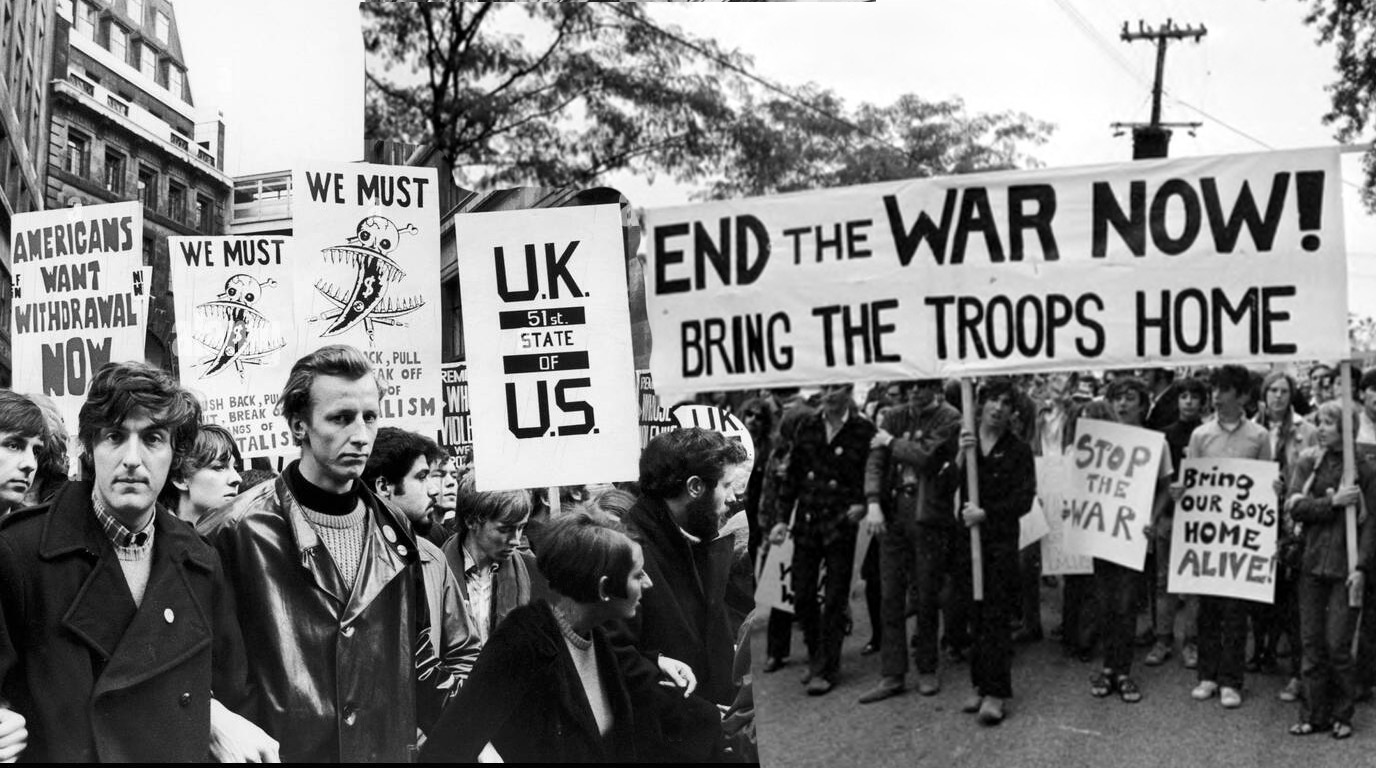
United States — The epicentre, driven by college students, civil rights activists, and the hippie movement. Mass protests against the Vietnam War drew hundreds of thousands.
Canada & Western Europe — Anti‑war sentiment intertwined with youth counterculture, civil rights activism, and political reform movements.
Australia — Anti‑war activism grew alongside the global counterculture, with protests against conscription and involvement in Vietnam.
Latin America & Eastern Europe — Student uprisings and political protests echoed anti‑establishment themes, though often under stricter political conditions.
The movement was part of a worldwide cultural shift, connected to civil rights, feminism, environmentalism, and anti‑nuclear activism.
Cultural Impacts: A Rebellion Against the Mainstream
The Anti‑War Movement was inseparable from the broader 1960s counterculture, which rejected conventional values and authority.
Youth Power and Political Activism
Young people — especially college students — became a political force. They organised teach‑ins, marches, and mass demonstrations. Anti‑war activism merged with civil rights, women’s liberation, and free‑speech movements. This era marked the rise of youth as a global political voice.
Communal Living and Alternative Lifestyles
The movement encouraged:
- Communes
- Shared resources
- Experimentation with spirituality and Eastern philosophies
- A rejection of consumerism and materialism
Anti‑Establishment Identity
The movement fostered distrust of government and traditional institutions.
It normalised questioning authority — a cultural shift that still shapes modern activism.
Music: The Soundtrack of Protest
Music was the emotional engine of the Anti‑War Movement.
Folk & Protest Music
Artists like Bob Dylan became icons of anti‑war sentiment, blending poetry with political critique. Gatherings such as Haight‑Ashbury became hubs for music, activism, and communal living.
Rock & Psychedelia
Rock festivals — Woodstock, Monterey Pop — amplified anti‑war messages through:
- Psychedelic experimentation
- Lyrics about peace, unity, and resistance
- Performances that became cultural milestones
- Music wasn’t entertainment; it was mobilisation.
Global Influence
The British Invasion (Beatles, Stones) and European rock scenes also carried anti‑war and anti‑establishment themes.
Fashion: Clothing as Protest
Fashion became a visual language of resistance.
Hippie Style
The hippie aesthetic was deeply tied to anti‑war values:
- Tie‑dye symbolised individuality and freedom.
- Fringe, embroidery, and handmade garments rejected mass consumerism.
- Non‑Western textiles reflected global unity and spiritual exploration.
Military Jackets as Anti‑Military Statements
Surplus army jackets were worn ironically — a critique of war rather than support for it.
Denim & Workwear
Denim became a symbol of solidarity with everyday people and a rejection of elite fashion norms.
The Peace Symbol
Originally designed in the UK for nuclear disarmament, it became one of the most recognisable icons of the anti‑war movement.
Natural Hair & Afrocentric Fashion
Influenced by the Civil Rights Movement, natural hair and Afrocentric prints became expressions of identity and resistance.
Fashion in the anti‑war era wasn’t about trends — it was about values.
Why the Anti‑War Movement Still Matters
The movement reshaped modern culture by:
- Normalising political protest
- Influencing contemporary activism
- Transforming fashion into a tool of identity
- Establishing music as a political medium
- Inspiring global youth movements that continue today
Its legacy lives on in environmental activism, anti‑nuclear campaigns, civil rights movements, and modern protest culture.