
The 1980s were loud — politically, economically, musically, and visually. Fashion became a way for people to express their place in a rapidly changing world. It was a decade of extremes: wealth and recession, glam and grit, conformity and counterculture. Clothing reflected these tensions, becoming a powerful social marker of aspiration, rebellion, and belonging.
Social Forces That Shaped 1980s Fashion
The Rise of Consumerism and “The Yuppie”
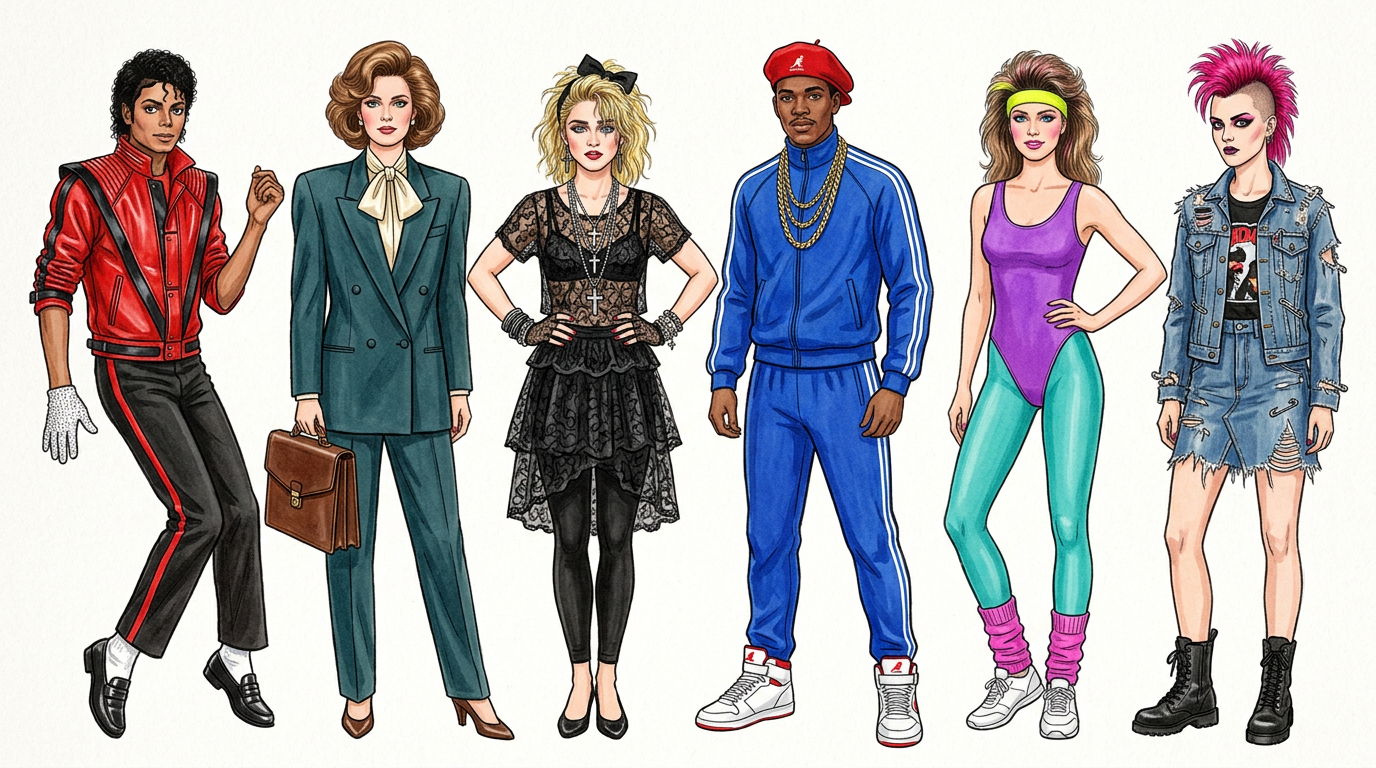
Economic deregulation and booming financial markets created a new class of young professionals — yuppies (Young Urban Professionals). They embraced designer labels as symbols of success. Wearing Ralph Lauren, Calvin Klein, or Armani wasn’t just about style; it was about projecting upward mobility.
Impact on clothing:
- Power suits with padded shoulders
- Silk blouses
- Leather briefcases
- Designer logos worn proudly
Fashion became a visual résumé.
Music Culture as a Style Engine
Music didn’t just influence fashion — it dictated it. MTV launched in 1981, turning musicians into global style icons overnight.
Key movements:
- Pop & Dance: Madonna’s layered lace, crucifix jewelry, and fingerless gloves
- Rock & Metal: Leather jackets, ripped denim, band tees
- Hip-Hop: Tracksuits, gold chains, Kangol hats, sneakers as status symbols
People dressed like the artists they admired, using clothing to signal their cultural tribe.
Fitness Craze and Body Consciousness
Aerobics, home workout videos, and the rise of gyms made fitness a lifestyle. Jane Fonda’s workout tapes became cultural phenomena.
Impact on clothing:
- Lycra leggings
- Leotards
- Leg warmers
- Neon headbands
Athletic wear moved from the studio to the street, blurring the line between exercise and everyday fashion.
Political Tension and Rebellion
Cold War anxieties, punk’s anti-establishment ethos, and youth frustration fueled subcultures that rejected mainstream fashion.
Punk & Post-Punk:
- Safety pins
- DIY modifications
- Combat boots
- Shaved or brightly dyed hair
Clothing became a protest — a rejection of polished consumerism.
Technology and the Future
The rise of computers and futuristic media shaped a fascination with metallics, synthetics, and sharp silhouettes.
Impact:
- Shiny fabrics
- Geometric cuts
- Sci-fi inspired accessories
People were dressing for the future they imagined.
Key Garments That Defined the 1980s
- Power Shoulder Blazers: Symbol of authority and ambition
- Acid-Wash Jeans: Casual rebellion with a distinctive texture
- Mini Skirts: Youthful, bold, often paired with oversized tops
- Members Only Jackets: A badge of coolness
- Tracksuits: From hip-hop culture to suburban gyms
- Leather Jackets: Rock, punk, and biker aesthetics
- Leg Warmers: Fitness culture meets street style
- Graphic Tees: Pop culture worn on the body
These garments weren’t just trends — they were cultural statements.
Key Figures Who Shaped 1980s Fashion
Designers
- Giorgio Armani: Redefined power dressing with soft-shouldered suits
- Calvin Klein: Minimalism and denim as luxury
- Vivienne Westwood: Punk’s fashion architect
- Jean-Paul Gaultier: Gender-bending silhouettes and avant-garde ideas
- Thierry Mugler: Sculptural, futuristic glamour
Icons
- Madonna: The queen of reinvention and street-meets-stage style
- Michael Jackson: Military jackets, loafers, and the single glove
- Princess Diana: Elegant, modern royal fashion
- Run-DMC: Adidas tracksuits and sneakers as cultural currency
- Cyndi Lauper: Colorful, eclectic, DIY-inspired looks
These figures didn’t just wear fashion — they created cultural identity through it.
What Fashion Meant to People in the 1980s
Fashion in the 1980s was deeply personal. It allowed people to:
Express Ambition
Power dressing helped women entering corporate spaces project authority in male-dominated environments.
Signal Belonging
Subcultures used clothing to identify each other — punks, metalheads, hip-hop communities, skaters, new romantics.
Experiment with Identity
Bold colors, exaggerated silhouettes, and eclectic layering encouraged self-expression.
Navigate Social Change
As gender roles shifted, fashion became a tool for exploring new forms of femininity and masculinity.
Feel Empowered
Whether through a sharply tailored suit or a neon leotard, clothing offered confidence and visibility.
The Legacy of 1980s Fashion Today
Modern fashion constantly revisits the 1980s because it was a decade of unapologetic creativity. We still see:
- Oversized blazers
- High-waisted jeans
- Neon accents
- Athleisure
- Logo-centric branding
The 1980s taught us that fashion can be expressive, political, playful, and powerful — all at once.