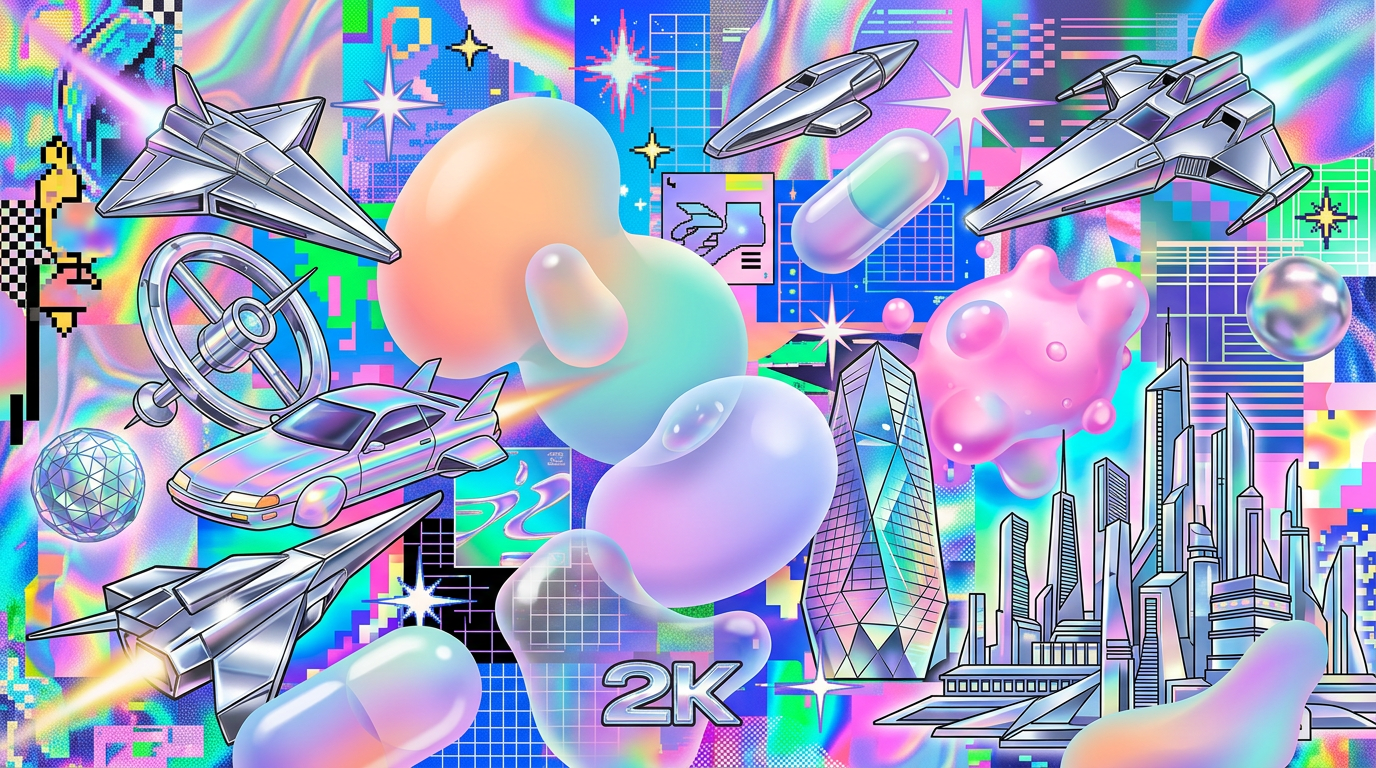

Post‑Millennium Culture: Why Y2K Art Looked the Way It Did
The early 2000s were defined by techno‑optimism, the dot‑com boom, and a cultural fascination with the digital future. The world was transitioning into an era of personal computers, early mobile phones, and glossy interfaces — and art responded accordingly.
Key cultural drivers included:
- Rapid technological advancement (iPods, digital cameras, early internet culture)
- Millennium anxiety and excitement (the Y2K bug, futurism)
- Media saturation from MTV, magazines, and celebrity culture
- Rave and club culture influencing materials like PVC, mesh, and metallic synthetics
This cocktail of optimism, fear, and digital experimentation produced a set of art styles that defined the Y2K era.
Prominent Y2K Art Styles & Movements
Retrofuturism / Cybercore
A glossy, chrome‑heavy vision of the future — the aesthetic most associated with “Y2K.”
Characteristics: metallic surfaces, reflective plastics, neon accents, synthetic materials, and smooth “blobject” forms.
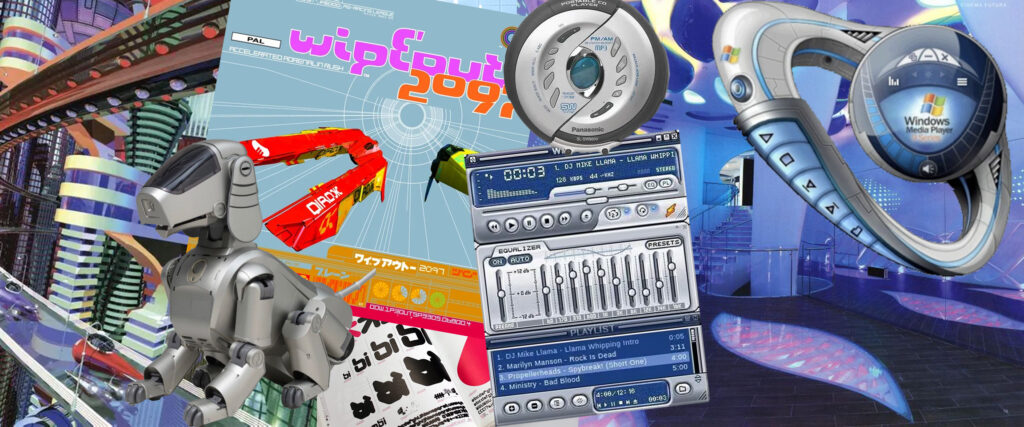
Influences: 1970s futurism, dot‑com era interfaces, early digital UI design.
Key Artists / Collectives:
- The Designers Republic — British graphic design collective known for futuristic typography and glossy digital visuals.
- Evan Collins / Y2K Aesthetic Institute — archivist documenting and shaping understanding of Y2K visual culture.
Blobject Design
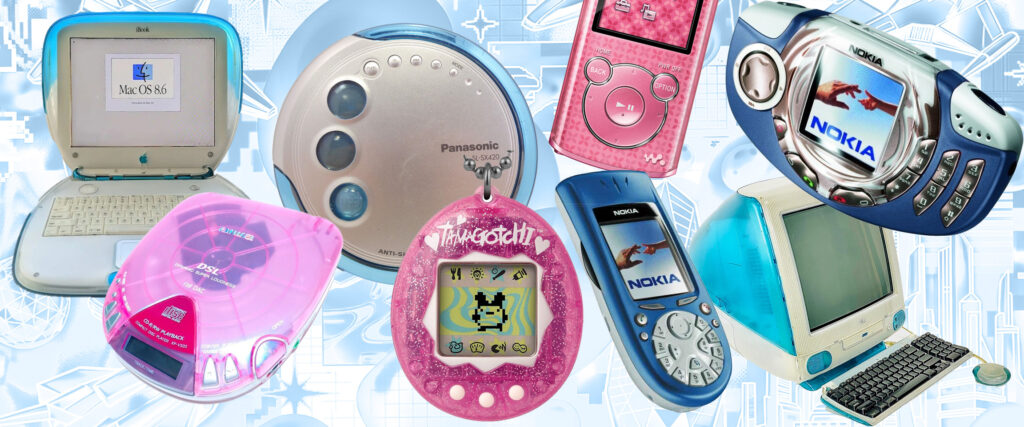
A design movement defined by soft, rounded, biomorphic shapes — think Apple’s iMac G3.
Characteristics: curved plastic forms, translucency, bright colorways.
Influences: industrial design innovation, new plastics manufacturing, desire for “friendly” tech.
Impact: Became a visual shorthand for early‑2000s futurism.
Key Example: Apple iMac G3 as a flagship blobject design.
Chromecore / Metallic Aesthetic
A sub‑movement within Y2K art focused on chrome, silver, and reflective surfaces.
Characteristics: mirror finishes, metallic fabrics, iridescent plastics.
Influences: sci‑fi films, automotive design, digital interfaces.
Presence: Dominant in fashion, graphic design, and product packaging.
Digital Pop / Media‑Driven Art
Fueled by MTV, celebrity culture, and globalized media.
Characteristics: glossy magazine aesthetics, hyper‑saturated colors, pop‑star iconography.
Influences: Britney Spears, Destiny’s Child, Christina Aguilera, and other pop icons who shaped visual culture.
Clubwear & Rave‑Inspired Visual Culture
Aesthetic borrowed from late‑90s rave scenes.
Characteristics: PVC, mesh, neon, playful accessories, cyber‑goth elements.
Influences: nightlife, electronic music, youth rebellion.
Impact: Mainstream fashion adopted these materials and silhouettes.
Key Artists & Creative Figures of the Y2K Era
While Y2K was more of a design movement than a fine‑art movement, several creators shaped its visual language:
The Designers Republic
Known for futuristic, angular, and glossy graphic design. Their work influenced everything from album covers to fashion branding.
Evan Collins (Y2K Aesthetic Institute)
Documented and codified the aesthetic, helping define its boundaries and historical context.
Pop Culture Icons as Visual Artists
Many musicians functioned as visual trend‑setters:
- Britney Spears — metallics, futurism, glossy pop visuals.
- Destiny’s Child — coordinated metallic outfits and cyber‑glam styling.
- Missy Elliott & Aaliyah — futuristic streetwear, oversized silhouettes, and digital‑inspired styling.
These artists weren’t traditional painters — but they shaped the era’s visual culture more than any gallery.
Global Spread of Y2K Art & Aesthetic
Y2K aesthetics were particularly popular in Japan, China, and South Korea, where cyber‑fashion and digital futurism blended with local pop culture. This global adoption helped cement Y2K as a youth‑driven, internet‑accelerated movement.
How Y2K Art Influenced Fashion & Youth Taste
Materials & Textures
Art movements emphasizing chrome, plastic, and synthetic shine translated directly into fashion:
- Metallic fabrics
- PVC pants and skirts
- Iridescent bags
- Glossy lip gloss and shimmering makeup These mirrored the chromecore and blobject aesthetics.
Silhouettes & Shapes
Rounded, futuristic shapes in art became:
- Bubble silhouettes
- Low‑rise jeans with curved waistbands
- Space‑age sunglasses
- Sculptural sneakers
Color Palettes
Bright lime, hot pink, orange, and sleek white — all core Y2K colors — came straight from digital UI and retrofuturistic art.
Youth Identity & Self‑Expression
Y2K art gave young people a visual language for:
- Tech optimism — dressing like the future was already here
- Pop‑star fantasy — emulating celebrity visuals
- Digital belonging — early internet communities shaped taste
- Escapism — glossy futurism offered relief from post‑9/11 anxieties
Commercial Fashion
Brands embraced Y2K art aesthetics to sell:
- Logo‑heavy clothing
- Shiny accessories
- Futuristic sportswear
- Velour tracksuits (Paris Hilton era)
Why Y2K Art Still Matters Today
The resurgence of Y2K aesthetics in the 2020s is tied to nostalgia cycles and digital culture’s acceleration. Scholars note its revival correlates with pandemic‑era uncertainty and economic recession — mirroring the anxieties of the original Y2K moment.
Today’s youth revisit Y2K art because it feels:
- Playful
- Futuristic
- Escapist
- Hyper‑digital
- Visually bold
It’s a reminder that art and fashion are always intertwined — especially when technology reshapes how we see ourselves.