
Madeleine Vionnet is one of those rare figures in fashion history whose influence feels both timeless and quietly radical. Her work doesn’t shout; it glides. Yet beneath that softness lies a fierce technical mind that reshaped the foundations of dressmaking. To understand twentieth‑century fashion—its silhouettes, its freedoms, its modernity—you inevitably return to Vionnet.
This post explores her early years, her innovations, the women who wore her garments, and the lasting impact she left on fashion design.
Early Life: The Making of a Technical Visionary
Madeleine Vionnet was born in 1876 in Chilleurs‑aux‑Bois, France, into a modest family. Her childhood was not gilded or glamorous; it was shaped by work. At age 12 she became an apprentice seamstress, learning the fundamentals of hand‑finishing, fit, and garment construction long before she encountered the Parisian couture world.
Two early experiences shaped her future approach:
- Her time in London working for Kate Reilly, a dressmaker known for impeccable fit. Here Vionnet learned precision, client‑focused tailoring, and the discipline of technical excellence.
- Her return to Paris, where she worked for the House of Callot Soeurs. Callot’s atelier was a laboratory of lace, drape, and artisanal technique. Vionnet absorbed their respect for craftsmanship but quickly developed her own philosophy—one that rejected excess ornamentation in favour of pure form.
By the time she joined Jacques Doucet in 1912, she had already formed the foundations of her aesthetic: simplicity, movement, and the body as the true source of beauty.
How Vionnet Shaped Fashion
The Bias Cut (Her Signature Revolution)
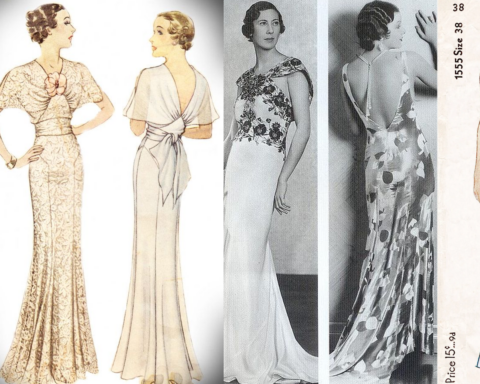
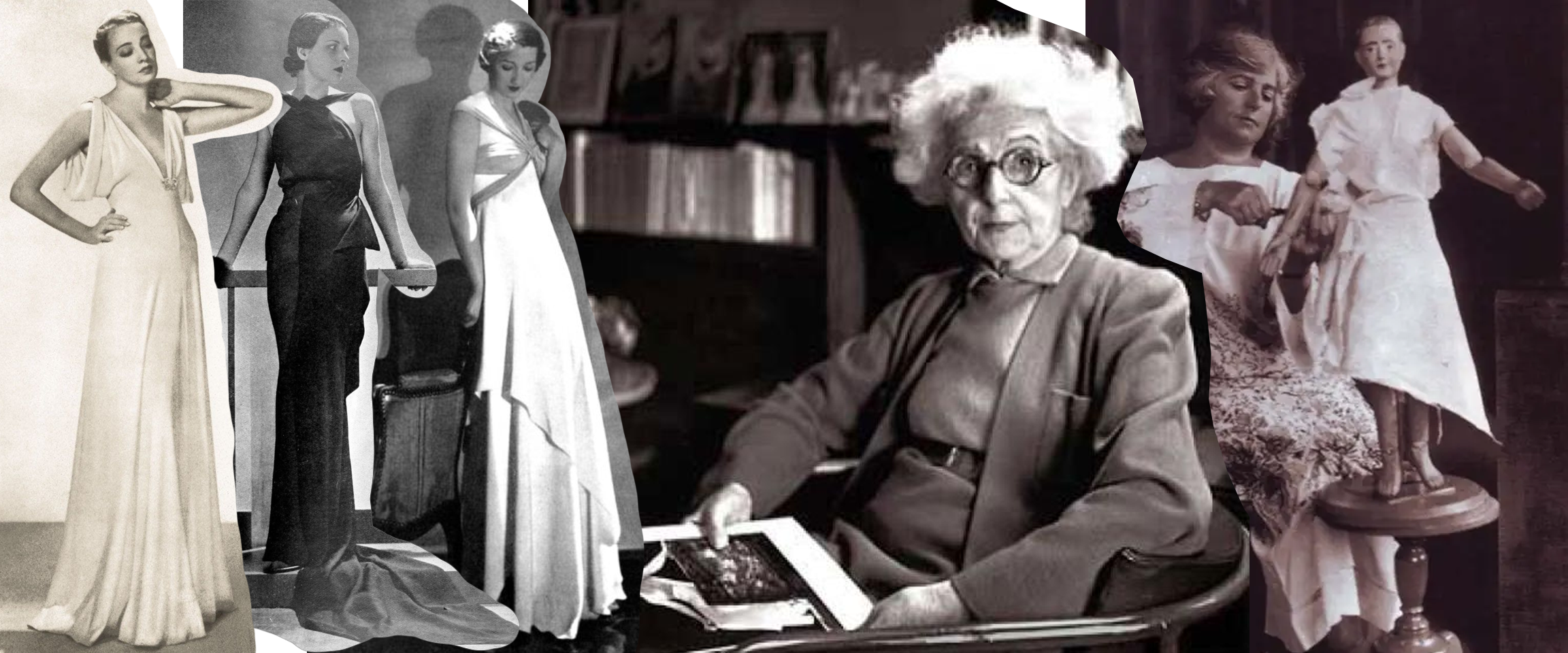
Vionnet didn’t invent the bias cut, but she weaponised it. She understood its physics—how fabric behaves when rotated 45 degrees, how it stretches, collapses, and clings. She used the bias not as a decorative trick but as a structural principle.
Her bias gowns:
- followed the body without constricting it
- moved like liquid
- allowed women to inhabit their clothes rather than fight them
This was a radical departure from the corseted, engineered silhouettes of the early 1900s.
Draping on the Miniature Mannequin
Vionnet worked on small wooden mannequins, treating dressmaking like sculpture. She draped fabric directly rather than sketching first, letting gravity and tension guide her decisions. This method anticipated modern 3D design thinking long before digital tools existed.
Mathematical Construction
Her garments often relied on geometric principles: squares, triangles, spirals. She approached fabric as architecture—something to be engineered, not merely decorated.
A Philosophy of Freedom
Vionnet believed clothing should support natural movement. She rejected corsets, padding, and rigid understructures. Her dresses were designed for real bodies in motion, not static poses.
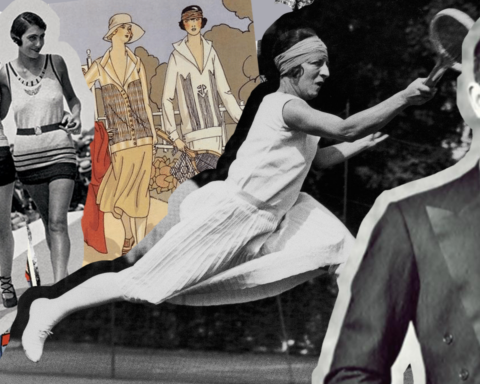
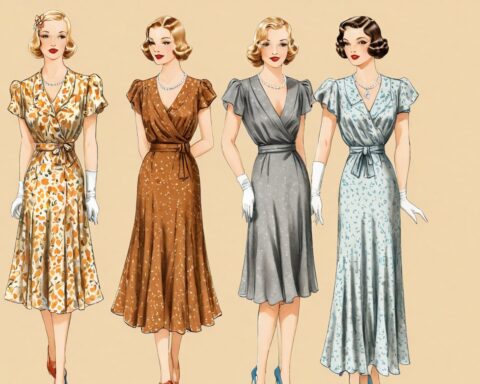
This philosophy helped usher in the modern silhouette of the 1920s and 1930s: fluid, elongated, and liberated.
Who Wore Vionnet
Her clientele included some of the most visible women of her era:
- Greta Garbo – whose statuesque presence was perfectly suited to Vionnet’s sculptural draping
- Marlene Dietrich – drawn to the sensual minimalism of Vionnet’s gowns
- Katharine Hepburn – whose athletic elegance aligned with Vionnet’s philosophy
- The Duchess of Windsor – a fashion icon who favoured Vionnet’s refined simplicity
These women amplified her aesthetic: modern, confident, and quietly powerful.
Her Influences
Vionnet’s influences were surprisingly diverse:
- Classical Greek sculpture She studied how garments in ancient sculpture appeared to float, cling, and reveal the body’s form. This became the foundation of her draping philosophy.
- Dance and movement She was fascinated by Isadora Duncan, whose free, expressive movement embodied the liberation Vionnet wanted to achieve in clothing.
- Geometry and architecture Her construction methods reveal a mind attuned to mathematics. She used geometric shapes as building blocks, creating garments that were both fluid and structurally sound.
- Craftsmanship from her early apprenticeship The discipline of hand‑sewing and the respect for technique she learned as a child never left her. Even at the height of her fame, she insisted on impeccable finishing.
Her Impact on Fashion
Vionnet’s legacy is vast and still visible today:
- The bias cut became a foundational technique in modern dressmaking, used by designers from Galliano to Azzedine Alaïa.
- Her draping methods influenced couture education, becoming standard practice in fashion schools worldwide.
- Her minimalist philosophy anticipated modernism, aligning her with contemporaries like Chanel and later designers like Halston.
- Her respect for workers and ethical production was decades ahead of its time—she provided paid holidays, healthcare, and maternity leave for her employees.
- Her silhouettes shaped the visual language of the 1930s, and continue to inform red‑carpet fashion today.
Most importantly, Vionnet changed how designers think. She proved that innovation doesn’t require noise—just mastery.
Why Vionnet Still Matters
Madeleine Vionnet’s work feels contemporary because she designed for the body, not the era. Her garments don’t rely on trend; they rely on physics, geometry, and human movement. In a fashion landscape often dominated by spectacle, her quiet radicalism remains a reminder that true innovation is structural, not superficial.
Her influence is everywhere: in the slip dress, the draped gown, the minimalist silhouette, the celebration of natural form. Every designer who drapes on the stand, every garment cut on the bias, every dress that moves like water carries a trace of Vionnet.
She didn’t just shape fashion. She reshaped the way fashion is made.