
The poodle skirt is one of those garments that instantly conjures an era: sock hops, jukeboxes, soda fountains, and the birth of the American teenager. But behind the nostalgia lies a surprisingly rich story about post‑war culture, design innovation, and the emergence of youth fashion as a force in its own right. Far from being a kitschy novelty, the poodle skirt helped reshape mid‑century fashion — and its influence still echoes today.
Where It All Began: A Designer, a Problem, and a Piece of Felt
The poodle skirt’s origin story is delightfully scrappy. In 1947, designer Juli Lynne Charlot needed a Christmas outfit but had limited sewing skills and little money. Her solution? A full circle skirt cut from felt, a fabric that didn’t require hemming and held its shape beautifully.
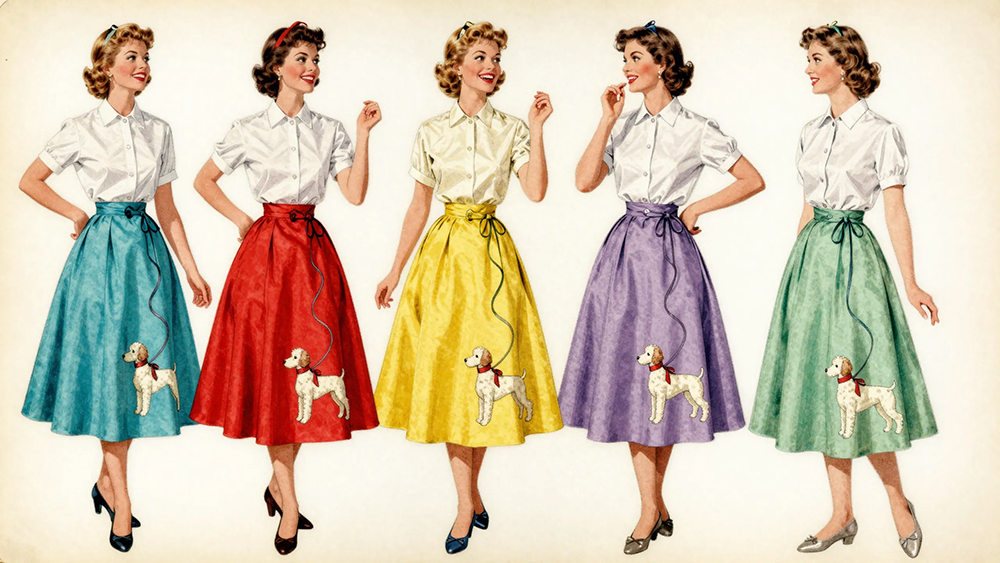
Charlot added appliquéd dogs — not poodles at first, but dachshunds in a little narrative scene — and the skirt became an instant conversation piece. Retailers noticed. Orders followed. A trend was born.
By the early 1950s, the poodle motif had taken over, partly because dogs were wildly popular in American culture at the time. Charlot leaned into storytelling, designing skirts that acted as wearable illustrations.
The Cultural Forces That Shaped the Poodle Skirt
Post‑War Prosperity and the Rise of the Teenager
The 1950s saw an unprecedented economic boom. For the first time, teenagers had disposable income and a distinct cultural identity. Fashion historians identify the poodle skirt as the first major teenage fashion trend.
This mattered. Before this, young people largely dressed like miniature adults. The poodle skirt helped carve out a new category: youth fashion, playful, expressive, and separate from adult style.
Dior’s “New Look” and the Return of Femininity
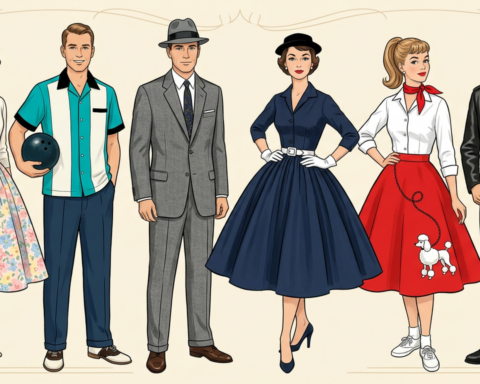
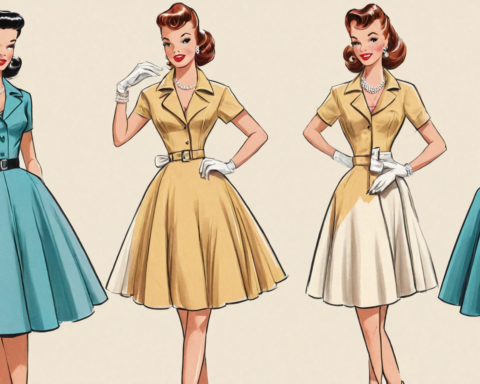
Christian Dior’s 1947 “New Look” — cinched waists, full skirts, and an emphasis on hourglass silhouettes — set the tone for the decade. The poodle skirt fit perfectly into this aesthetic, offering volume, movement, and a sense of romantic femininity.
Suburban Life and Social Rituals
As families moved to the suburbs, new social spaces emerged: school dances, drive‑ins, soda shops. The poodle skirt was made for movement, flaring beautifully when spinning — ideal for jitterbugging at sock hops.
Hollywood and Mass Media
Movie stars and magazines embraced the look, amplifying its popularity. Mail‑order catalogs dedicated entire sections to poodle skirts by 1952.
Design Influences: Why the Poodle Skirt Looked the Way It Did
Felt as a Fashion Fabric
Felt wasn’t a couture textile — but it was:
- inexpensive
- easy to cut
- structured enough to hold a perfect circle
- ideal for appliqué
This made the skirt accessible, fueling its spread among teens who could make their own at home.
Appliqué as Personal Expression
The poodle was the star, but skirts also featured:
- flamingos
- flowers
- cars
- musical notes
This customization made the garment feel personal, aligning with the growing desire for individuality in youth culture.
How the Poodle Skirt Influenced Fashion
It Cemented the Power of Youth Culture
The poodle skirt proved that teenagers could drive trends — a revelation that reshaped the fashion industry. Brands began designing specifically for teens, a practice that continues today.
It Popularized the Circle Skirt Silhouette
While circle skirts existed before, the poodle skirt made them mainstream. The silhouette became a staple of 1950s fashion and remains a go‑to retro style.
It Elevated Novelty Fashion
Charlot’s storytelling appliqués helped normalize narrative clothing — garments that express personality, humor, or interests. This lineage runs through:
- 1960s pop‑art fashion
- 1980s novelty sweaters
- modern graphic tees and statement pieces
It Reinforced the “New Look” Aesthetic
By embracing full skirts and defined waists, the poodle skirt helped solidify the 1950s feminine silhouette inspired by Dior.
It Became a Cultural Symbol
Even after the trend faded, the poodle skirt lived on as a symbol of:
- 1950s Americana
- innocence and optimism
- the birth of teen culture
Its modern revivals — from costumes to retro fashion — show how deeply it’s embedded in cultural memory.
The Poodle Skirt Today
Modern versions are still made, often as nostalgic reproductions. They appear in:
- retro parties
- school productions
- vintage‑inspired fashion
- rockabilly communities
And while the appliqué poodle may feel whimsical now, its legacy is serious: it helped democratize fashion, empower youth culture, and usher in a new era of expressive clothing.